Idiyappam — The Rice Noodle of Sri Lanka and Kerala

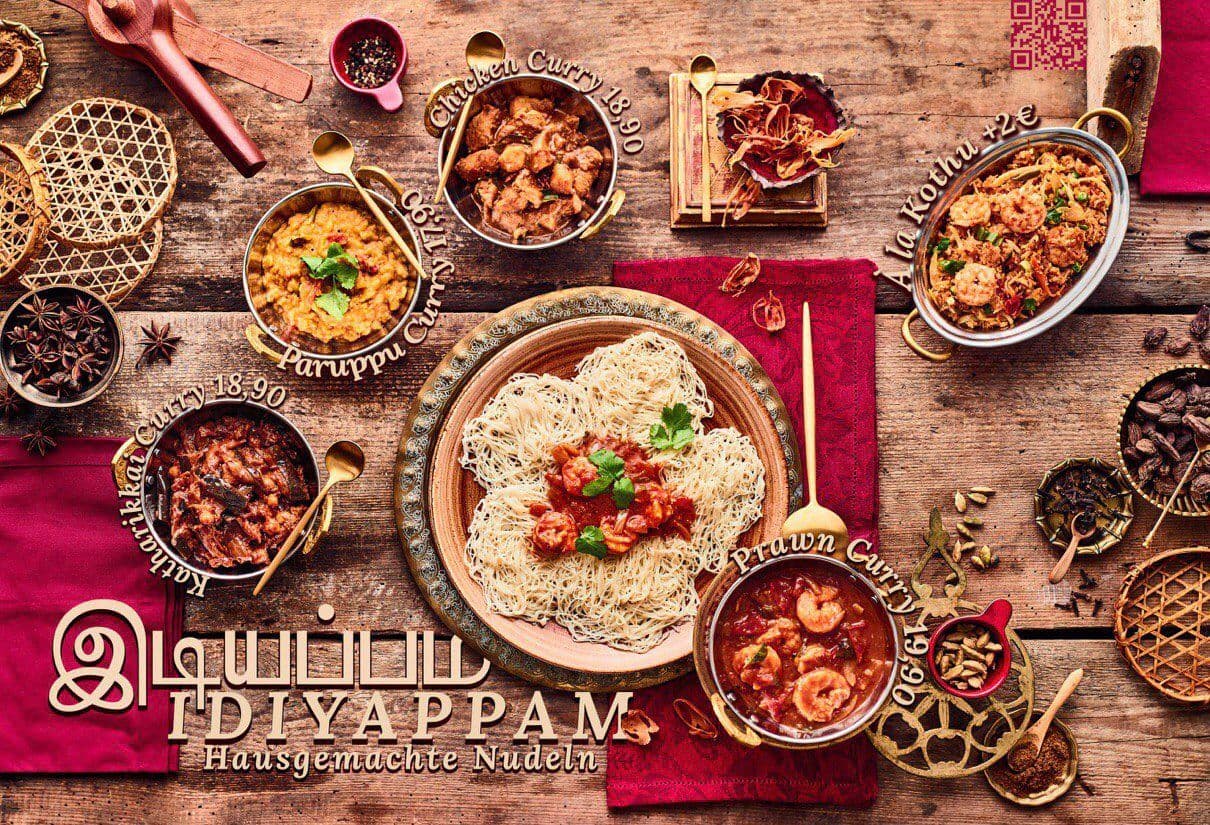
Idiyappam is a rice noodle, but not the kind you fry in a wok. It is made from rice flour dough pressed through a hand-cranked brass mould into delicate, silky strands that are then steamed on banana leaves into lacy, disc-shaped nests.
In Sri Lankan Tamil households, idiyappam — which Sinhalese cooks call string hoppers — is a breakfast anchor. The nests are piled onto a plate, drenched in coconut milk gravy (sothi) or a gentle fish curry, and eaten with the fingers. In Kerala, the same dish shows up as the companion to ishtu, a gentle coconut stew with potatoes and green chilli.
How they're made
The steps are straightforward, the execution is practised:
- Rice is roasted gently, then ground into a fine flour
- The flour is blended with boiling water and a pinch of salt into a pliant dough
- The dough is packed into a brass press called an idiyappam achu
- Strands are pressed directly onto a circle of banana leaf
- The nests are stacked in a steamer for eight minutes
The result should be pale, slightly translucent, and just firm enough to lift with your fingers without breaking. If it breaks, the dough was too dry. If it sticks, too wet.
What to eat them with
Our table rotates between three accompaniments: sothi (coconut milk gravy with a hint of turmeric and fenugreek), a mild Jaffna fish curry, and sweet coconut milk with jaggery as a dessert idiyappam. Any of the three works. The goal is that the noodles carry what they are dipped in — they are not the star, they are the platform.
On our weekly menu, idiyappam shows up on Sunday mornings. If you have Jaffna roots, you know. If you don't, this is a gentle way to discover what Sri Lankan home breakfasts actually look like.
Weiterlesen
Mehr aus der Thamarai-Küche.